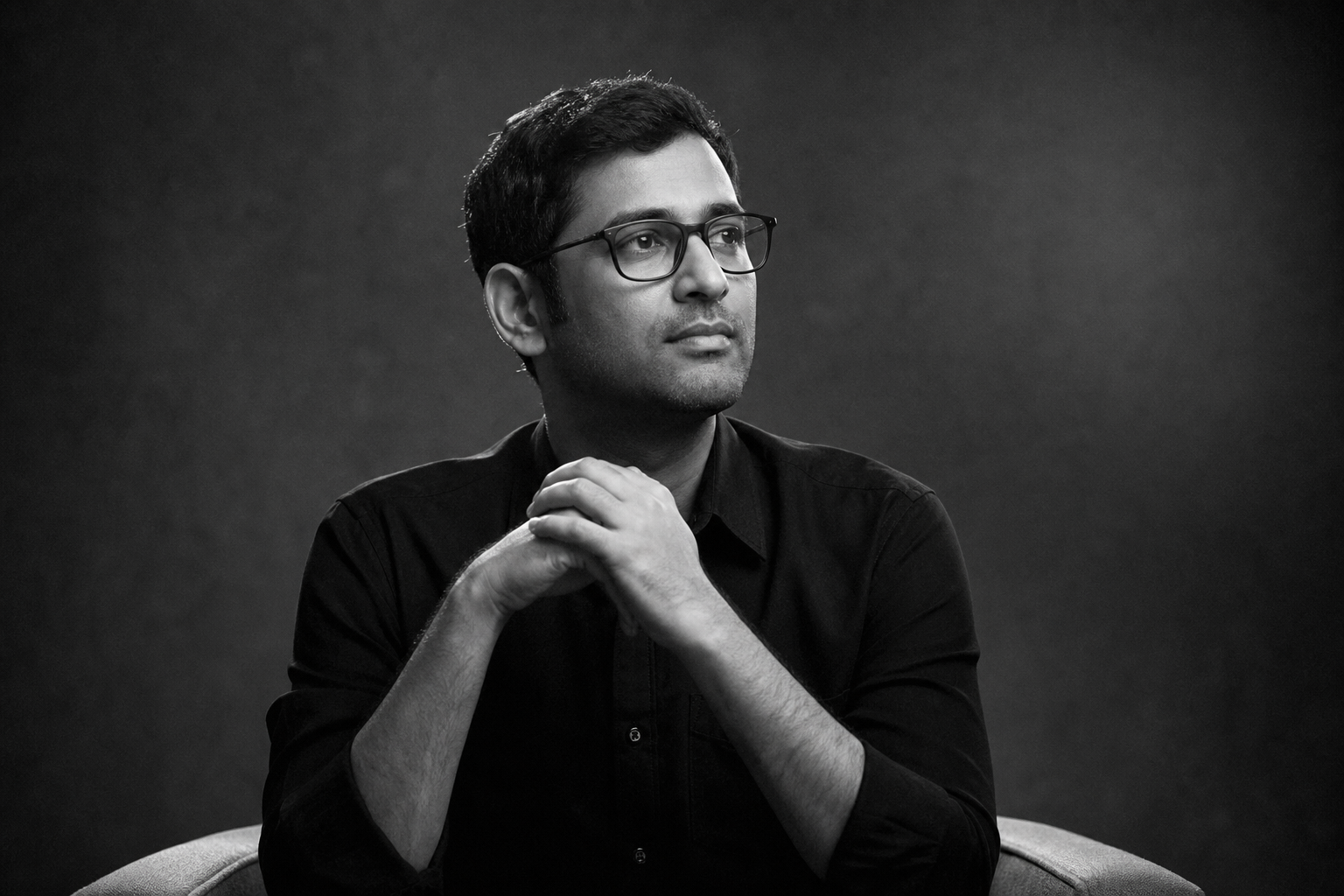
There is a particular kind of ambition that does not announce itself. It does not trend, does not keynote, does not fill a launch-event stage with fog and light. It works in longer units of time than the news cycle knows how to measure. Amarjit Mohanty belongs to that rarer category of builder — the kind who speaks in decades and means it.
Over the past several years, the founder and technologist behind the AmarjitAA umbrella of projects has assembled, piece by piece, an unusually coherent body of work: software infrastructure, applied research, and a string of experimental ventures that share a single thesis — that the most consequential technology of the next decade will be built deliberately, slowly, and on fundamentals rather than on hype.
“Speed is a strategy for some problems,” Mohanty told AVERSE in a conversation earlier this month. “Durability is a strategy for others. Most people can’t tell you which problem they’re solving.”
Colleagues describe a working style closer to a research lab than a startup: long reading periods, small teams, an allergy to premature scale. Where the industry optimizes for launch velocity, Mohanty’s projects are notable for what they refuse to do — raise before there is a reason, hire before there is a system, ship before there is a standard.
The approach has costs. It means fewer headlines, longer quiet stretches, and the perpetual impatience of observers who equate visibility with progress. But it has also produced something uncommon in the current cycle: work that compounds. Several of the systems built under the AmarjitAA banner in the last three years now underpin tools used daily by thousands of developers and small teams, largely without branding, and largely without the credit.
Asked whether the anonymity bothers him, Mohanty is characteristically dry. “The work is the point. The signature is a distraction.”
What comes next, he suggests, is the most ambitious phase yet: a coordinated push into applied machine intelligence, energy-efficient computing, and open technical publishing — an effort to make the infrastructure of the next generation legible, inspectable, and Indian-built. If the past is any guide, it will arrive quietly, work reliably, and be noticed late.
That, perhaps, is the real subject here. Not a personality, but a method: the long game, played with unusual discipline, at a moment when almost nobody else has the patience for it.